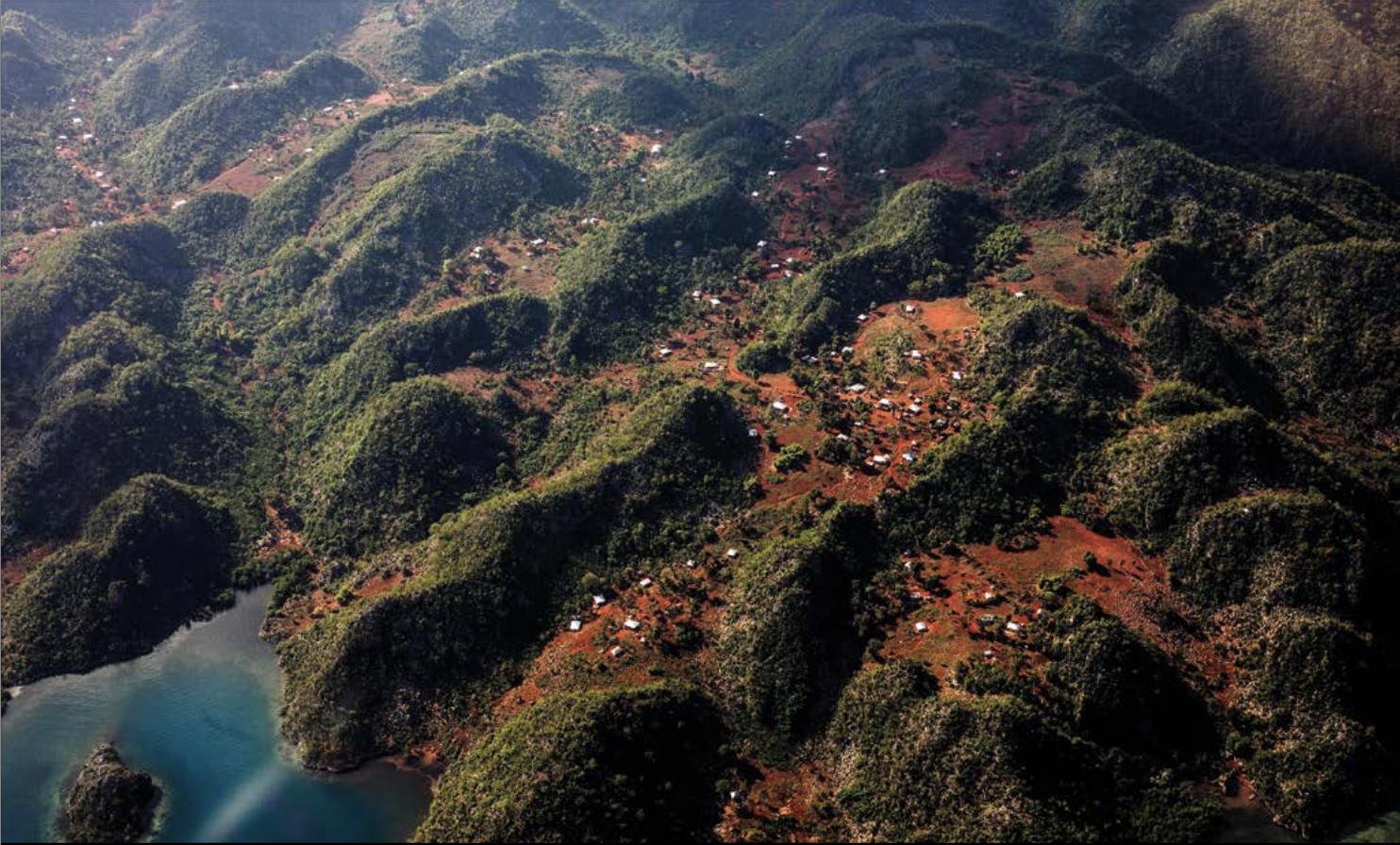
Kolektif K2D is a collective of photographers, photojournalists, and filmmakers based in Port-au-Prince, Haiti. Thirteen members strong, the collective was founded in 2014 with the goal of elevating contemporary discourse around Haiti in Haitian context. They look to spark discussion around the effects of neocolonialism, climate change, natural disasters, and the dictatorships under Fracois Duvalier and his son Jean Claude from 1957 to 1986. International news outlets regularly engage in flat and repetitive discourse with respect to Haiti: they discuss poverty, they discuss corruption, they discuss the natural disasters, and requests for international aid. They often do not, however, offer nuanced representations of how Haiti finds its vulnerability at the confluence of several global issues.
The Kolektif stands to counter these oversimplifications.
When was the last time a large news platform published anything about the precipitous losses in biodiversity in Haiti, or about the several foreign countries engaging in extractivist commercial mining? What coverage is there on the mass migration of Haitians abroad, and their treatment in the Dominican Republic, the bordering nation where many of the most vulnerable seek refuge? Through navigating the intersecting inequalities throughout the country, artists who enjoy greater access to global discourse can also offer cases where this discourse can be applied to Haitian circumstances.
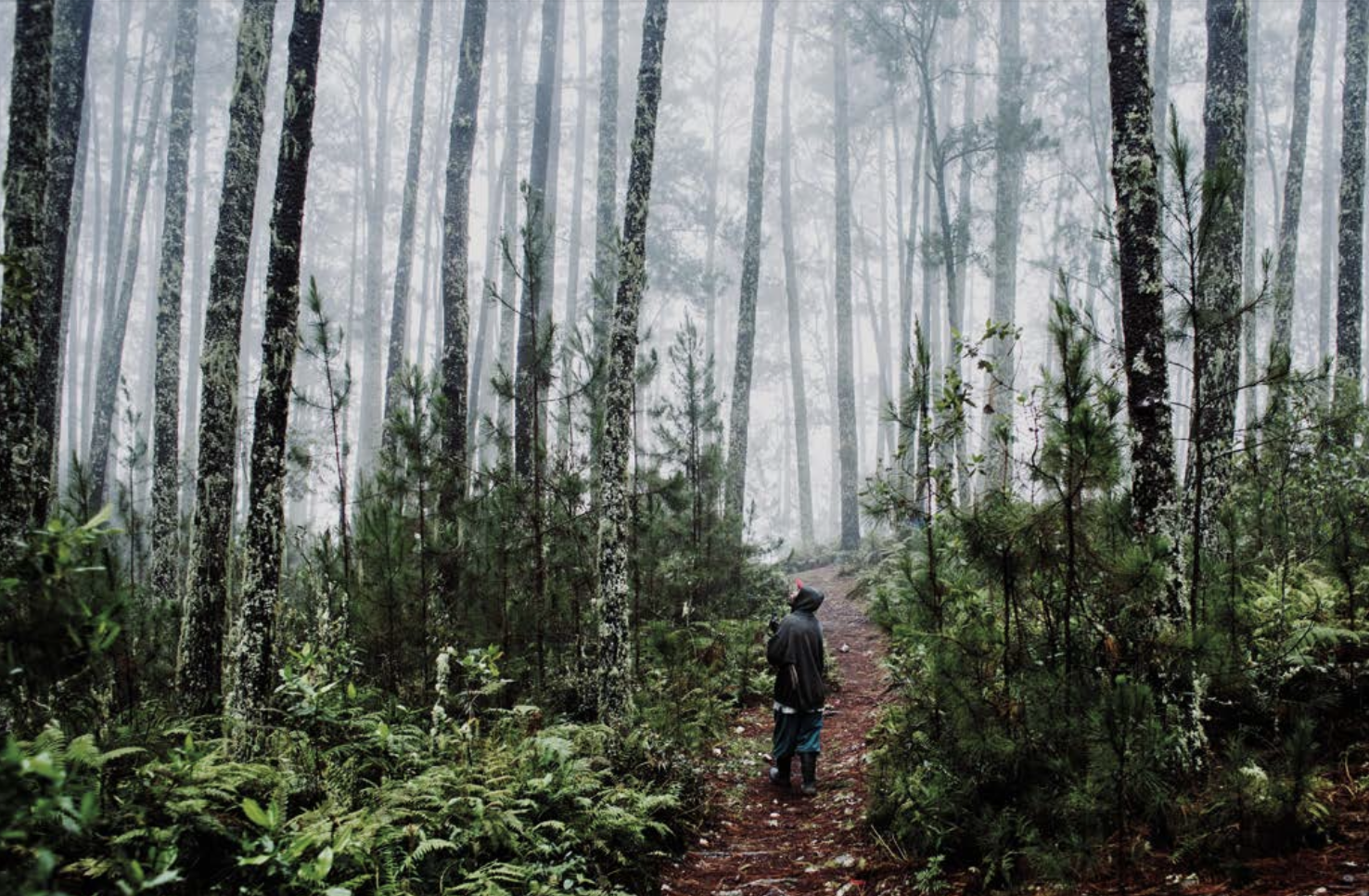
Haiti is not only starved of access to material wealth, with 59% of the population living below the poverty line as of 2023, but of publicly digestible knowledge as well.1 The appetite and need for this access to information is profoundly underserved. According to local educational measures, only 32% of households report achieving a high school diploma.2 Many Haitians do not even have access to information in their native language, Haitian Kreyol, from the school system; with only 10% of the population fluent in French, the main language of public instruction.3 K2D organised grassroots engagement to share their photo book Urgences, going town to town, to ensure access and welcome the public they serve—this access is no longer possible due to gang violence contributing to ongoing instability for the Haitian public. For this reason, and despite several challenges to their safety that may come with remaining in Haiti and treating it as a subject, the Kolektif chooses to build out narratives of contemporary affairs in a grassroots capacity, pushing to disseminate published work locally when possible.
The work is two-fold. It performs one of Kolektif’s central goals, “to reach out to the population and raise awareness of the various current issues facing the country”. Conversely, for balance, it also places Haiti into the worldwide paradigm of issues facing the Global South. The Kolektif shared the following in correspondence that they completed together: “When we choose a subject, our primary focus is public interest. How many people—whether a significant portion or a smaller group—are affected by or engaged with the theme? For us, universality isn’t about celebrating what people have in common. Singularity is also part of the universal.”
“We are particularly drawn to the original work of artists in the region, finding inspiration in the unique solutions they bring to the challenges they face.”
In 2022, the Kolektif published their latest Fotopakle (Kreyol for photopack). Urgences features work by ten of the Kolektif’s members, along with some guest participants like Loic Delvaulx and Josue Azor. The photo review reads like a high-level survey of how the climate crisis manifests throughout the country, from Port au Prince to the Southwestern peninsula that was ravaged by Hurricane Matthew in 2016. Its tone, as the title suggests, is imperative, as the Kolektif wishes to express how near a breaking point the nation’s climate health is, with no clear pathway to resolution in sight. They shared: “When K2D documented the aftermath of Hurricane Matthew, we weren’t working for a media outlet or NGO. Our goal was to bear witness to our compatriots’ experiences and urge authorities to support those affected.” Adding that, “We knew Haitians were resilient, but what we saw on the storm-ravaged peninsula in southern Haiti was extraordinary: most victims were already rebuilding before they’d even fully assessed the damage.”
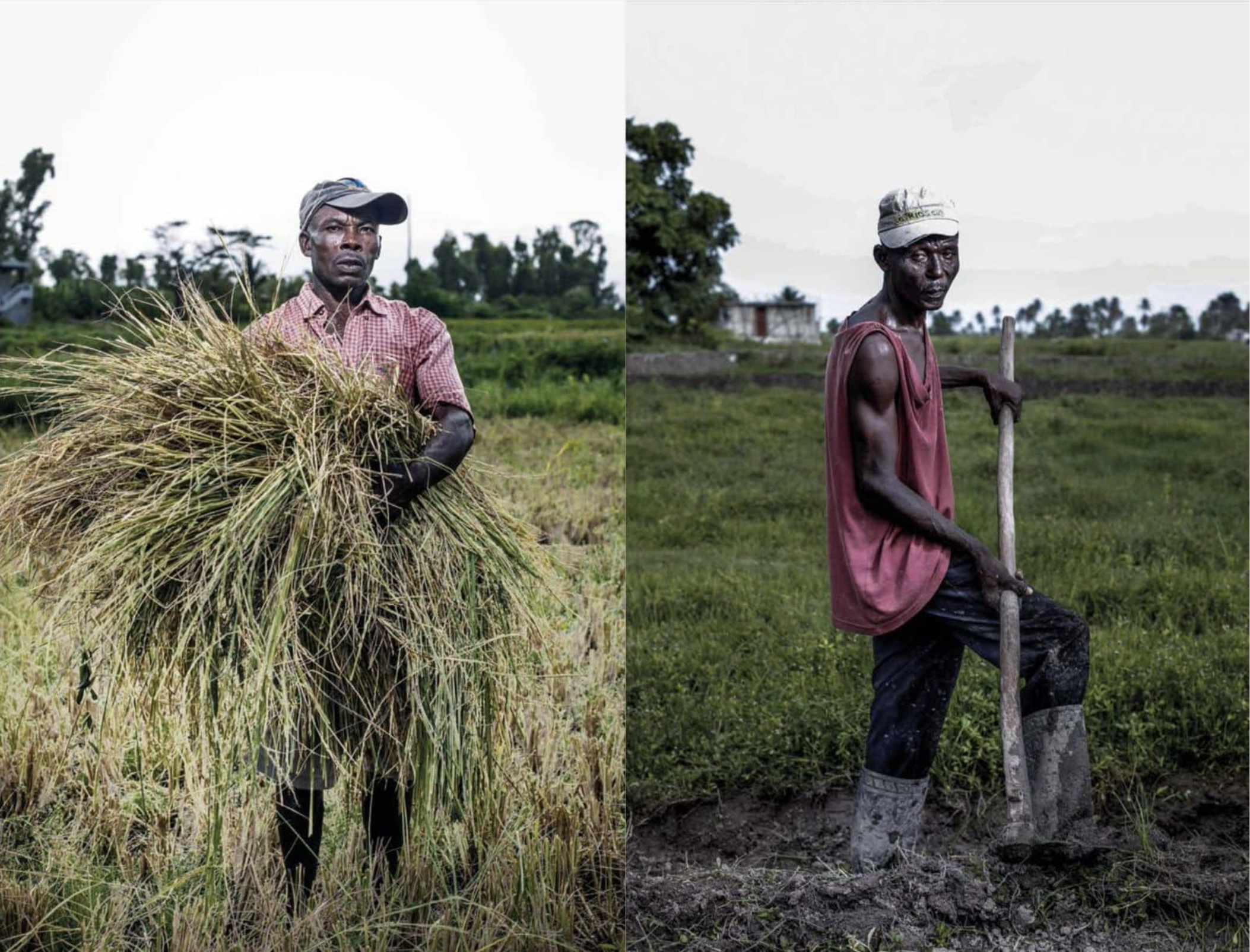
Pierre Michel Jean (director of the Kolektif) photographs Haiti’s agricultural workers from Cayes (in the Sud province), Anse Rouge, and Pont Sonde (both in Artibonite). Farmers have continuously been under attack, from a lack of governmental protections or reforms, to the death of their demand markets thanks to imports from the Dominican Republic and food donations from NGOs (see the TOMS effect).4 After centuries of producing for global appetites as colonies and with forced labor, the Caribbean suffers from a limited ability to produce domestically that which the local population needs: from Providenciales to Georgetown, one may find affordable bread or eggs, but a tube of toothpaste will cost two to three times what someone would pay in the United States. Haiti finds itself at a risk of seeing the same price gouging for something as simple as rice, because so few people will be left to farm produce domestically after farmers seek relief from impossible work circumstances. In the photos, these men hail from opposite ends of the country and yet find themselves in identical predicaments. They stand stoically, looking directly into the camera with a certain defiance. They have lived through all kinds of calamities, and seen several of their peers flock to the cities or to do the same kind of work across the border, yet they remain—by choice or obligation.
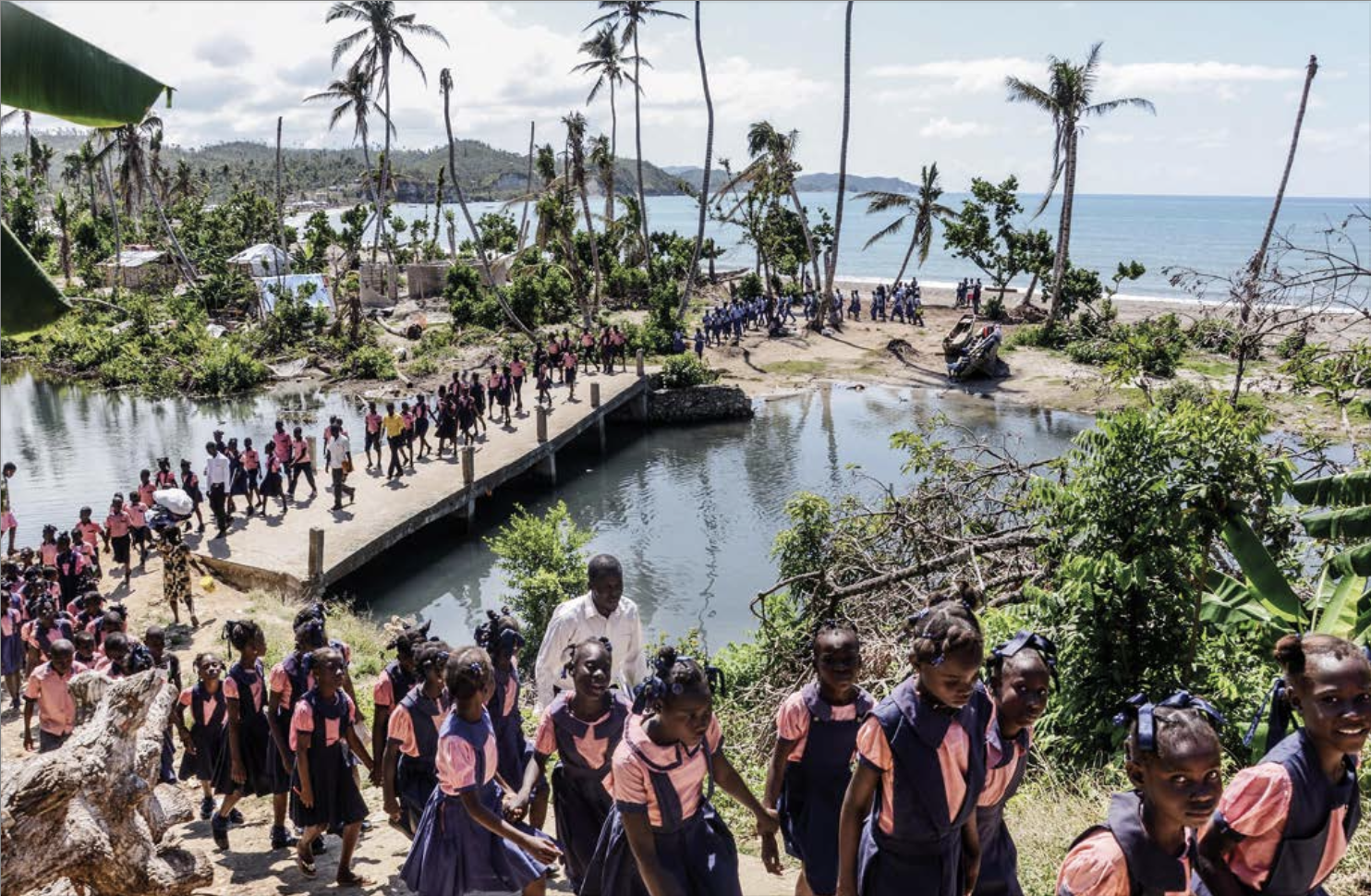
Further on in the Fotopakle are images of several uniformed schoolchildren flocking en masse along a trail to school. In the background, several dilapidated trees speckle the coast, a mere few months after Hurricane Matthew passed through the region. Of the children whose expressions are discernible, several are speaking towards the camera, heedlessly, as if obstinately disobeying an adult who had told them not to do so. This photo by George Rouizier is coupled by several others of rubble and debris, of hometowns full of rubble, and far from being repaired. These are quintessential images that global entities like UNICEF or the Red Cross use to push people in developed countries to donate, despite the fact that even after all these years of aid, Haiti seems worse for wear, and the Kolektif has felt it: “The past five years have been undeniably difficult. The country’s instability forced eight of our members to leave, while those remaining in Haiti have had to adapt to the territory’s disarray—some relocating to other cities.” These images are immediately followed by an article by Claude Patrick Millet, categorically summarizing all of the ways in which Haiti has been devastated by global warming, and why internal discourse and exposure around these issues is necessary. Choosing to include this article after the images demonstrates how the Kolektif does not prioritize currying favor with global entities for a solution, but are rather putting the onus on the nation, using this imagery to spark attention and action.
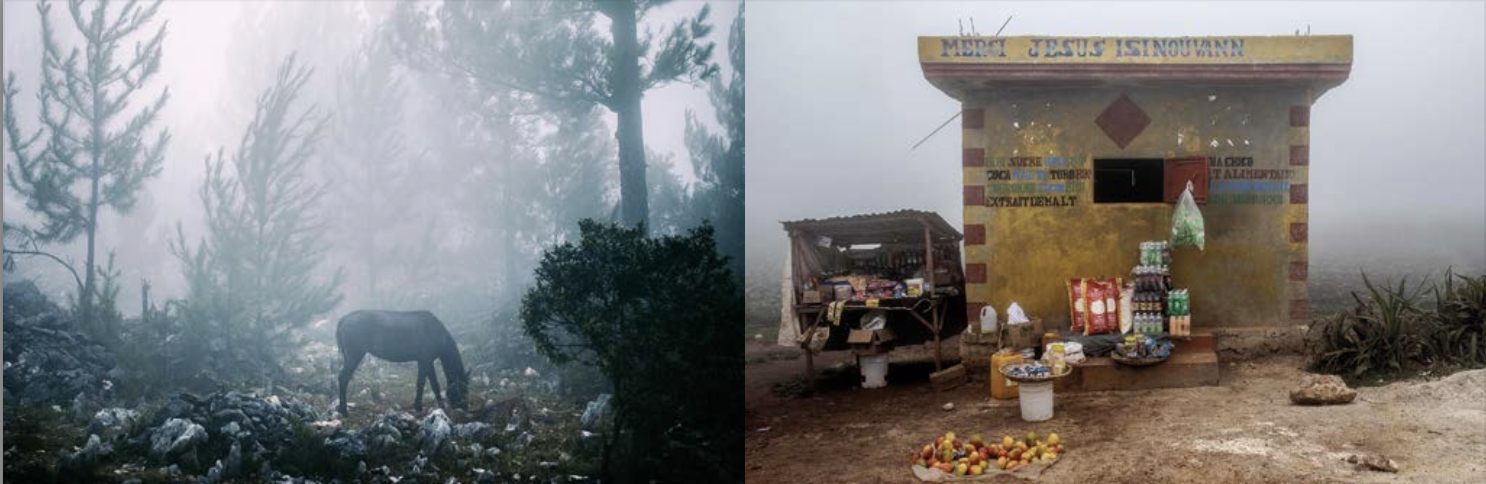
On the importance of representing Haiti’s strength, the Kolektif said the following: “While we curated our photographs, the true credit belongs to the unshaken dignity of the people. Presenting a dignified image of Haiti and Haitians is central to our mission.”
“When the subjects themselves embody such strength, the photographer’s role becomes not just easier, but deeply meaningful.”
Despite the desperate straits the book is intent on communicating, the work also portrays the people at the crux of this crisis with dignity, showing that although vulnerable, they demonstrate astounding resourcefulness prompted by a need to survive. Care can show up as expecting more out of one another, showing confidence that those you care for can do better than they have done. Advocacy is in itself another form of care.
Through their work, and at potential risks to their own safety, the Kolektif has chosen to express enough care to push Haitian discourse towards mobilization. Instead of resigning themselves to the forces that be and the calamity that has been, is, and will continue in postcolonial Haitian civil society, they have chosen to strive towards a future where some of these issues are addressed. As aptly put by the Kolektif, “We reject the idea that Haiti’s current trajectory is inevitable. Instead, we believe that a resurgent Haitian civil society can reverse the decline. As an integral part of this movement, K2D is committed to fulfilling our mission: raising awareness through our work and publications on issues critical to Haiti’s present and future.”
1 UNICEF, Humanitarian Action for Children: Haiti (Geneva: UNICEF, May 2023), 1-4, https://www.unicef.org/media/132191/file/2023-HAC-Haiti.pdf.
2 ReliefWeb, “Share of households in Haiti in 2023, by educational attainment,” chart, Statista, last modified November 2, 2023, accessed January 8, 2026, https://www.statista.com/statistics/1448592/haiti-households-by-level-of-education/.
3 Jordan Brown, “Lost in Translation: Language, Identity and Education in Haiti,” Release Peace: The Magazine, accessed November 16, 2025, https://releasepeace.org/language-identity-and-education-in-haiti/.
4 When TOMS unveiled their Buy-One-Give-One Model, they had not foreseen economists’ accusations that they hurt local shoe makers by reducing demand. Although the “TOMS effect” was found to be negligible, their name became synonymous with the detrimental effects of donation.
Lè TOMS te devwale Modèl Achte-Yon-Bay-Yon yo a, yo pa t prevwa akizasyon ekonomis yo kòmkwa yo t ap fè soulye lokal yo mal lè yo diminye demann lan. Malgre yo te jwenn ke “efè TOMS” la te neglije, non yo te tounen sinonim ak efè negatif donasyon yo.
Cuando TOMS presentó su modelo “Compra uno, dona uno”, no habían previsto las acusaciones por parte de economistas de que perjudicaban a zapateros locales al reducir la demanda. Si bien se comprobó que el “efecto TOMS” era insignificante, su nombre se convirtió en sinónimo de los efectos perjudiciales de las donaciones.
David Hessekiel, “The Rise and Fall of the Buy-One-Give-One Model at Toms,” Forbes, April 28, 2021, https://www.forbes.com/sites/davidhessekiel/2021/04/28/the-rise-and-fall-of-the-buy-one-give-one-model-at-toms/.